Showing posts with label Research (Ruth). Show all posts

Saturday, 11 December 2010

Research - Bloomberg specifications

PERSONALITY
Images should be:      
·         Smart
·         Bold
·         Open
·         Dynamic
 WRITING HEADLINES
·         Lead with verbs when possible
·         Write in capitals
·         Keep it short
·         Capture concepts and ideas

BLOOMBERG LOGO COLOURS

·         On any background: White or Yellow
·         On yellow white or light photographic backgrounds: Black

·         On white backgrounds: Grey

TYPEFACE

·         Primary = Akzidenz Grotesk  BOLD or REGULAR

·         Secondary = Ariel BOLD or REGULAR


HIGHLIGHTING

·         Use one colour only

·         Use only one of the colours with black and/or white for impact and contrast.

Aside from an occasional accent, never use more than one of colour within a given spread, ad, poster, etc.

COLOUR PALETTE

Monday, 22 November 2010

Research - body 'paint' in contemporary advertising

Haagan Dazs

Ariel

Young Designers Emporium

 
Coca-Cola

Source: No-Copy Advertising by Lazar Dzamic

Body paint by John Vargas:


Sunday, 21 November 2010

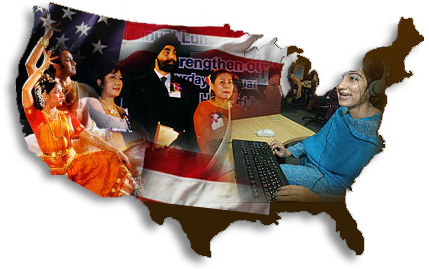
Research - Use of ethnic images in advertising

"The funny thing about living in a post-racial society is that no one can agree on what’s racist. So for your debating pleasure, we ask: Is It Racist If… "


Advert for Allied Media Corp:


In a country known for its ethnic and cultural diversity, Australian advertising promotes the idea of a “white” Australia and often stereotypes ethnic characters in advertisements.


There seems to be no problem in using tribal and ethnic influences in fashion - Adverts for ethnic fashion:


Image from Indoor Media

HSBC reflects differences in local customs and culture without resorting to ethnic images:

Friday, 19 November 2010

What do we want our images to capture?


Research - European body painting

Around Europe there are many traditional costumes but there is not much use of body painting - see http://www.euroheritage.net/traditionalcostumes.shtml.

The two examples I found are:

1. Coconut clog dancers from the North West of England.  The dances they perform are actually folk dances and the custom of blackened faces may reflect a pagan or medieval background which was done to disguise the dancers from being recognised by evil spirits afterwards, it may also reflect mining connections.
The picture is by no means clear and tales have been related by word of mouth, however, the dances are supposed to have originated with Moorish Pirates (hence the costume). Some of these sailors are said to have settled in Cornwall and become employed in local mining. As mines and quarries opened in Lancashire in the 18th & 19th century a few Cornishmen came north bringing with them mining expertise. It is with these people that the dances were reputedly brought to this area.


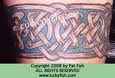
2. Although it may actually be a myth it is widely held that in early Britain Celtic Warriors painted themselves blue with woad.  It is generally believed that complex Celtic patterns and symbols were painted onto the body and face:


Research - North American body paint

Native American tribes have used body paint from their first appearance in North America in about 10,000 B.C.E. , both to psychologically prepare for war as well as for visual purposes.

Two major ingredients in body paint were charcoal and ocher, a reddish clay.  Other natural ingredients, including bird excrement, plant leaves, and fruits, were mixed with animal fat and hot water to make paint. Tree branches and animal bones were used as paint-brushes. Indians painted in various shapes, often stripes, circles, triangles, and dots.

Given the high availability of red ochre throughout North America, red became the most used body paint color for indigenous tribes.  The Beothuks of what is now Canada, for example, painted their entire bodies red to protect themselves from insects.  Some theorize that this appearance is what led to the general derogatory term "redskin" for Native Americans.  Other colors were also used and when Europeans and Americans opened trading posts in the nineteenth century, they introduced more colors for paints.

Colors had specific connotations for Indians. Historian Karl Gröning observed in Body Decoration: A World Survey of Body Art that "The combination of colour and motif was very important to the individual, who saw it as his 'medicine', his personal tutelary spirit."  In the Blackfoot tribe of the Plains, for example, warriors who had performed heroically had their faces painted black.  Similarly, the Teton Sioux of the Plains used black paint for victory and white for mourning.

Indians used war paint to rally themselves for battle and frighten enemies, in the way sports teams wear the same uniforms.  The Catawbas of the Southeast painted one eye in a white circle and another eye in a black circle. Louis Capron observed in the National Geographic Magazine article "Florida's 'Wild' Indians, the Seminole" that for the Seminoles, red paint "signifies blood," green paint near the eyes helps a person "see better at night," and yellow paint is "the color of death" and "means a man has lived his life and will fight to the finish."
Generally, tribal elders wore different paints than their inferiors.  Members of the Assiniboine tribe in what is now the state of Montana painted their faces red and black, but the chief painted his face yellow.  Different tribes had different gender rules about painting themselves; while the Seminole tribe in Florida forbade women from face paint, the neighboring Timucuans allowed both men and women to use body paint.
Source: www.fashionencyclopedia.com/fashion_costume_culture/Early-Cultures-Native-American/War-Paint.html
Cherokee
Huron

Sioux  
Blackfoot

The native artists of the Northwest Coast of North America have always made beautiful masks. The masks are carved out of wood. They are painted bright colours, and decorated with shells and fibre.   Many of the masks look like human faces, but represent mythical beings or monsters out of folktales.  Other masks look like the heads of animals.  In special ceremonies, the masks are brought out and worn by the actors and dancers.
Kwakiutl ceremonial mask
Ceremonial owl mask
Tsimshian Raven

Tuesday, 16 November 2010

Research - continents

A continent is one of several large landmasses on earth. They are generally identified by cvonvention rather than any strict criteria, with seven regions commonly regarded as continents – they are (from largest in size to smallest): Asia, Africa, North America, South America, Antarctica, Europe, Australia.


Each continent is so large that there is a huge variety of ways in which people decorate themselves.  Here is just one example from each continent (except Antarctica which has  no permanent human residents):

Africa
Sambaru people from Kenya

Asia
Chinese theatrical costume
 North America
Native American, Alberta, Canada

Australian Aboriginals

South American
Yanomami

Europe
Coconut clog dancer, Bacup

Research - Bloomberg corporate values

Bloomberg's four core values are:
  • The spirit of innovation
  • The empowerment of people
  • Clarity of purpose
  • Open communications
Other words they use to describe their brand are:
  • Transparent
  • Agile
  • Global
  • Local
  • Real service/real people
  • Professional
  • Making a difference
  • Trusted
  • Valuing diversity
  • Philanthropic
  • Green
Key words from the brief are:
  • Smart
  • Bold
  • Open
  • Dynamic
  • Humanity

Sunday, 14 November 2010

Research - Artistic influences

Norman Rockwell
A Brief Biography
Without thinking too much about it in specific terms, I was showing the America I knew and observed to others who might not have noticed.
Norman Rockwell
Born in New York City in 1894, Norman Rockwell always wanted to be an artist.
Rockwell found success early. He painted his first commission of four Christmas cards before his sixteenth birthday. While still in his teens, he was hired as art director of Boys’ Life, the official publication of the Boy Scouts of America, and began a successful freelance career illustrating a variety of young people’s publications.
At age 21 Rockwell set up a studio and produced work for such magazines as Life, Literary Digest, and Country Gentleman. In 1916, the 22-year-old Rockwell painted his first cover for The Saturday Evening Post. Over the next 47 years, another 321 Rockwell covers would appear on the cover of the Post.
The 1930s and 1940s are generally considered to be the most fruitful decades of Rockwell’s career. He moved to Arlington, Vermont, in 1939, and his work began to reflect small-town American life.
Saying Grace

Vacation

Gossip

In 1943, inspired by President Franklin Roosevelt’s address to Congress, Rockwell painted the Four Freedoms paintings. They were reproduced in four consecutive issues of The Saturday Evening Post with essays by contemporary writers. Rockwell’s interpretations of Freedom of Speech, Freedom to Worship, Freedom from Want, and Freedom from Fear proved to be enormously popular. The works toured the United States in an exhibition that was jointly sponsored by the Post and the U.S. Treasury Department and, through the sale of war bonds, raised more than $130 million for the war effort.
In 1953, the Rockwell family moved from Arlington, Vermont, to Stockbridge, Massachusetts and he began to work for Look magazine. During his 10-year association with Look, Rockwell painted pictures illustrating some of his deepest concerns and interests, including civil rights, America’s war on poverty, and the exploration of space.
Source: The Norman Rockwell Museum.  www.nrm.org/about-2/about-norman-rockwell/

Research - Body adornment

There are many forms of body adornment from around the world including:

Tattoos

Body paint

Jewellery

Costumes

Makeup

Light

Piercings

Masks